What Causes White Film and Dull Spots Around the Faucet?
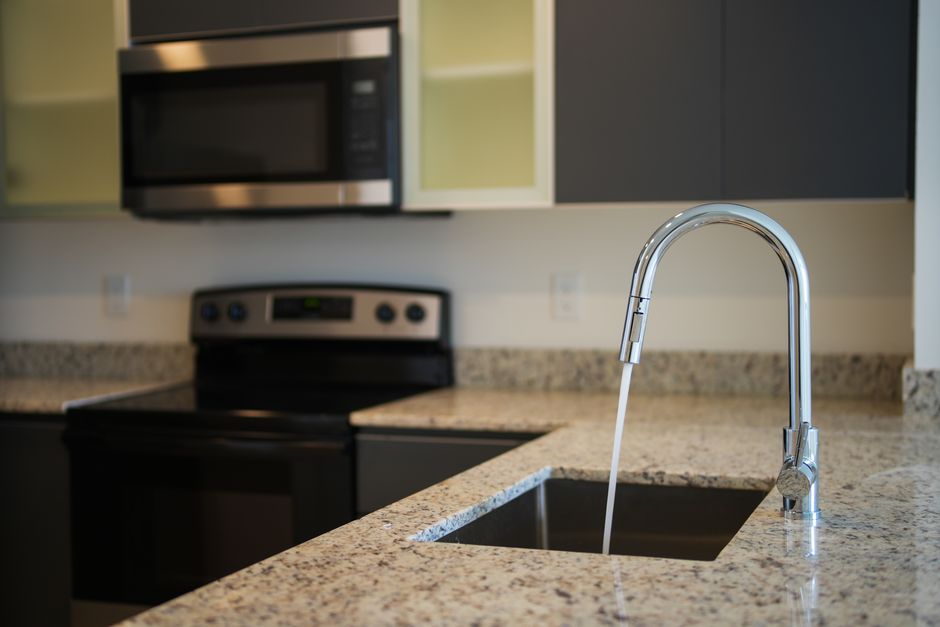
White crust at a faucet looks like hard water scale, and often it is, but sometimes the surface underneath is already damaged. The checks for telling the two apart on a Boise, ID countertop are set out in the breakdown sitting on countertops boise 10 selection, and they start with a dry fingertip and a flashlight held low across the surface.
What scale looks and feels like
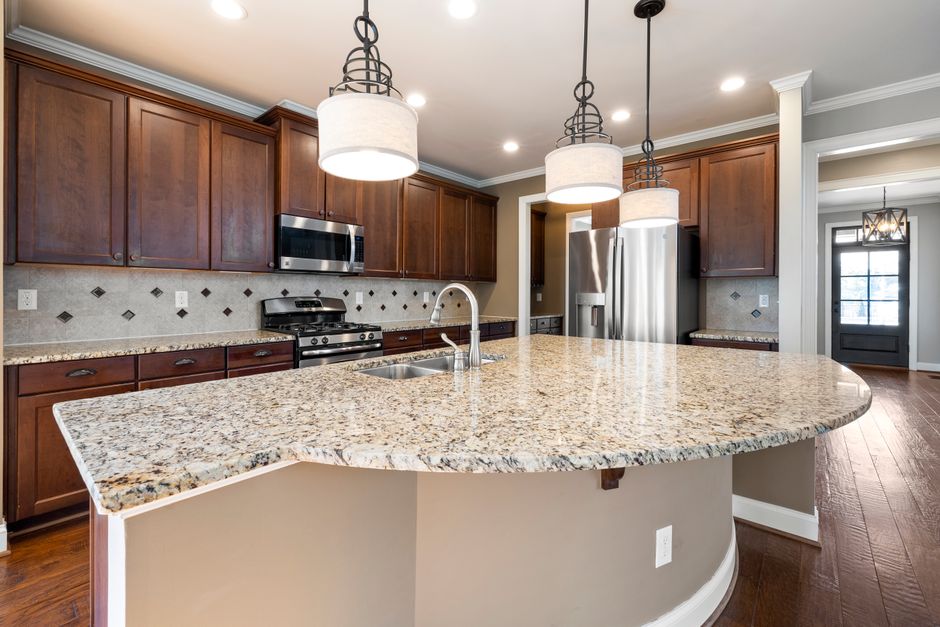
Water containing calcium and magnesium leaves those minerals behind when it evaporates. The result is a white ring or crust around the spout, the handle base, and the drain. Dry air in Boise helps water evaporate quickly, so a droplet left beside the faucet overnight can leave a visible spot by morning. Scale sits on top of the surface. Run a fingernail across it and it usually feels rough or raised.
What etching looks like
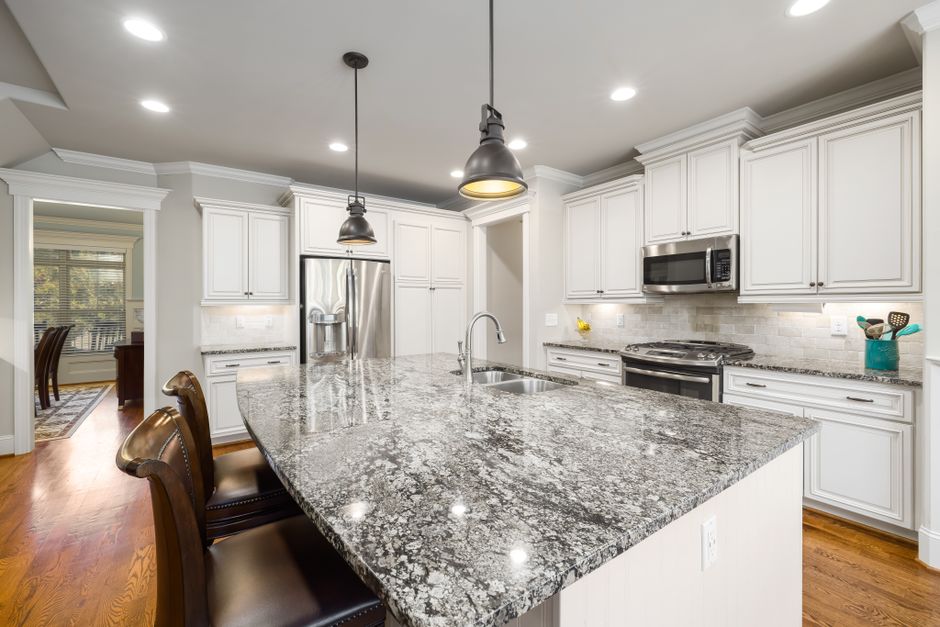
Etching is damage to the surface itself. It often looks dull even when the spot is clean, and it feels smooth rather than gritty. On polished marble it shows as pale, cloudy patches where a drip or a cleaner sat too long. Not every white mark is a mineral deposit, so a mark that stays after gentle cleaning should be treated as possible surface damage, whatever the material, whether granite, quartz, or a polished slab of something softer.
Check the material before cleaning
Acidic cleaners such as vinegar can dissolve scale, but they can also etch marble, limestone, travertine, and some other calcite based stones. Vinegar is not safe on every countertop. Identify the material first. Laminate, solid surface, soapstone, and butcher block each have their own care instructions, and a hidden corner near the seam or under the overhang is the place to test anything new. Rinse and dry the test spot, then look at it in raking light.
Removing and preventing buildup
Wiping the area dry after use reduces mineral buildup more than any product does. For crust that has already formed, a plastic scraper is less likely to scratch many surfaces than a metal blade. Hold it nearly flat, push gently, and stop if the crust does not lift. Heavy scraping on a polished edge profile or a thin eased edge can leave marks worse than the scale.
Moisture that keeps returning
Repeated moisture at the faucet base can also point to a loose fitting or a failed seal. Before blaming the water, check the plumbing and the joint between the sink and the top. Look at the caulk line, feel for a faucet body that rocks under light pressure, and check under the sink for damp mounting hardware. A constant trickle into the same spot will mark the surface faster than any amount of splashing.
When the polish is gone
Etching on polished stone may require professional honing and polishing, because a sealer or cleaner cannot replace the lost polish. A fresh coat of sealer will not reverse etching, it only coats the damaged finish. A fabricator can refinish the area in place on many installs, and a large etched zone near the sink sometimes calls for a new template and a replacement piece cut from a remnant.